The Space Between Launch and Adoption: Why Readiness Is the Real Growth Strategy
I didn’t set out to build a career in medical devices. I started in education. And in many ways, I never left.
Early in my career, I led global training during a major enterprise system implementation. We built everything the traditional way, screenshots, SOP binders, step-by-step manuals that took hours to assemble.
It was meticulous work. Time-consuming. Sometimes frustrating.
But I learned something early: When you train someone well, they thrive.
I still follow one of the representatives I trained years ago, now a senior executive in healthcare. Growth like that doesn’t happen by accident. It begins with clarity and confidence.
Training is leverage.
As I moved into marketing and product leadership, I saw training from another vantage point.
I helped launch a complex medical device globally, technology that required precision, coordination, and trust from clinical teams. We invested deeply in usability and interface optimization.
And then we handed clinicians a 20-page paper-based “Quick Start Guide.” In a procedure room.
We had refined the product experience. But the training model hadn’t evolved.
That disconnect stayed with me.
Later, at a startup commercializing a new ECMO system, the stakes were even higher. The mission was clear: expand access to life-sustaining therapy beyond major academic centers. The team was exceptional. The therapy was powerful. Training, however, was one of our most complex operational challenges.
PowerPoints. In-person intensives. Shipping equipment across the country. Flying multiple team members onsite for every launch.
And here’s what we saw: Every time our professional education team trained in person, utilization increased. Because confidence increased.
Providers felt supported. Commercial teams felt prepared. Cases followed.
But scaling that model was incredibly difficult. Travel-heavy, resource-intensive training does not keep pace with commercial growth.
Adoption doesn’t slow because technology fails. It slows when readiness doesn’t scale.
That’s why Monarch Learning Labs resonated with me immediately.
When I first saw a digital product twin, I thought about all the moments in my career when something like this would have changed the trajectory.
I thought about onboarding new sales reps and expecting them to master clinical complexity in a matter of weeks. I thought about professional education teams traveling nonstop, compressing days of learning into a single session because that was the only model available. I thought about providers navigating high-pressure cases and wishing they had a way to revisit the experience in context between procedures.
In every one of those situations, the commitment and expertise were there. The limitation was the structure around them.
A digital product twin doesn’t replace strong education. It removes the structural constraints that make scaling it so difficult.
It allows learning to begin before the first case and continue long after it. It allows repetition without patient risk and reinforcement without travel. It integrates updates directly into the experience instead of layering them onto static materials.
That shift matters.
Because when confidence builds earlier, onboarding shortens. When readiness improves, adoption accelerates. When teams feel prepared, utilization follows.
Over the course of my career, I’ve seen that innovation rarely stalls because the technology lacks sophistication. It stalls when readiness doesn’t scale alongside it.
For the first time, I feel like the training model finally matches the ambition of the innovation.
And when innovation and education scale together, confidence does too.
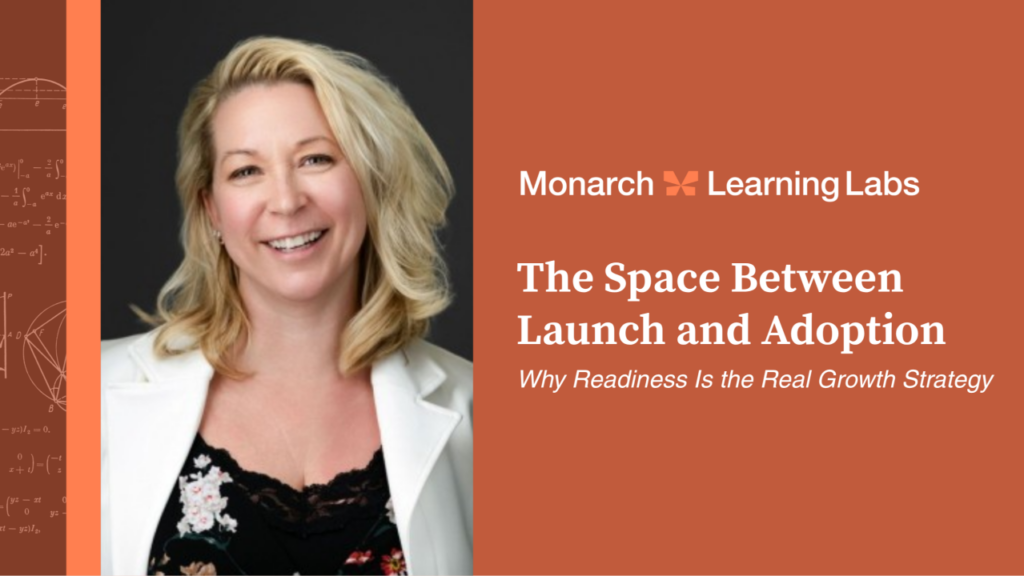
Alison Gerlach, is the CEO and founder of Monarch Learning Labs